

Plenary
Milad Abolhasani, NCSU – North Carolina State University, USA
Title: Autonomous Flow Laboratories for Rapid Materials and Molecular Discovery
Milad Abolhasani is the ALCOA Professor and a University Faculty Scholar in the Department of Chemical and Biomolecular Engineering at North Carolina State University. He also serves as the Director of Accelerated Technologies within NC State’s Integrative Sciences Initiative. Dr. Abolhasani leads a multidisciplinary research group that studies data-rich self-driving labs tailored toward accelerated discovery, development, and manufacturing of advanced functional materials and molecules. Dr. Abolhasani has received numerous awards and fellowships, including NSF CAREER Award, Dreyfus Award for Machine Learning in the Chemical Sciences & Engineering, AIChE Allan P. Colburn Award, AIChE Catalysis & Reaction Engineering Early Career Investigator Award, AIChE 35 Under 35, Scialog Fellowship, AIChE NSEF Young Investigator Award, and I & EC Research 2021 Class of Influential Researchers.
Tanja Junkers, Monash University, Australia
Title: Creating the data for an informatic chemistry future from flow synthesis
Prof. Tanja Junkers graduated with a PhD in physical chemistry from Goettingen University in Germany in 2006, having worked on the determination of kinetic rate coefficients for radical reactions during polymerizations. In the two years that followed, she was research associate at the University of New South Wales in Sydney, shifting her focus more and more towards synthetic polymer chemistry. From mid 2008 on she was a senior research scientist at the Karlsruhe Institute of Technology in Germany. Early 2010 she was appointed professor at Hasselt University in Belgium, where she founded the Polymer Reaction Design group. January 2018 she joined Monash University as full professor, focusing on her work on continuous flow polymerizations, (nano)particle formation, chemical recycling of polymers and design of complex precision polymers. She is a pioneer in continuous flow polymer synthesis, and has shifted her research focus over the years more and more towards the digitalization and automation of chemical processes. Next to her scientific work, she is an active member of various committees and subgroups of the IUPAC, an associate editor of the Royal Society of Chemistry flagship journal Chemical Science and from December 2025 on the chair of the Royal Australian Chemical Institute’s Polymer Division.
Invited Speakers
Timothy Noël, University of Amsterdam
Title: RoboChem and the Rise of Intelligent Flow Chemistry
Timothy Noël studied Chemical Engineering in Ghent and obtained his PhD in synthetic organic chemistry at the University of Ghent. Next, he worked at the Massachusetts Institute of Technology (MIT) as a Fulbright Postdoctoral Fellow with Professor Stephen L. Buchwald. In 2012 he became an assistant professor at Eindhoven University of Technology where he was appointed associate professor in 2017. Currently, he is a Full Professor at the University of Amsterdam and Chair of Flow Chemistry at the Van ‘t Hoff Institute for Molecular Sciences. His research interests are synthetic organic chemistry and technology, and especially the delicate synergy between these two fields. He is the editor-in-chief of Journal of Flow Chemistry.
Marcus Baumann, University College Dublin
Title: New Tools for Photochemistry and Metalation Reactions in Flow Mode
After graduating from Philipps-University Marburg, Marcus Baumann moved to Cambridge for his Ph.D. with Prof. Steven Ley, where he focused on the development of new continuous flow approaches for important organic transformations and the synthesis of selected natural products. This was followed by a postdoctoral position at the University of California, Irvine, then with Prof. Ian R. Baxendale at the University of Durham, where he combined his interests in continuous flow technology and the synthesis of bioactive target molecules. In 2017, he joined University College Dublin as an Assistant Professor in Continuous Flow Chemistry, where he focused on new continuous flow methods, exploiting photochemistry, biocatalysis, and high-energy processes. He was promoted to Associate Professor in March 2023.
Frank Gupton, Virginia Commonwealth University, Medicines for All Institute
Title: The Impact of Green Chemistry on Access to Essential Medicines
Frank Gupton is Professor of Chemistry at Virginia Commonwealth University and Founder and Director of the Medicines for All Institute. He is an internationally recognized leader in process chemistry and pharmaceutical manufacturing, with deep expertise in organic synthesis, route design, and scale-up. His work focuses on developing robust, cost-effective manufacturing pathways for essential medicines. Prof. Gupton is the recipient of multiple national and international awards recognizing innovation in pharmaceutical science, technology transfer, and global health impact. Through close collaboration with industry and global partners, his work has significantly improved worldwide access to high-quality antibiotics and antivirals.
Anita R. Maguire, University College Cork
Title: Leveraging Flow Chemistry to Address Synthetic Challenges
Anita R. Maguire studied at University College Cork, focusing during her PhD on asymmetric catalysis. Following postdoctoral research at Namur, Belgium and subsequently at Exeter, she returned to Cork in 1991 to establish an independent research team. She is currently Head of the School of Chemistry. Her research interests include development of novel synthetic methodology employing a-diazocarbonyl compounds and organosulfur chemistry, asymmetric synthesis catalysis, continuous flow chemistry and the design and synthesis of bioactive compounds. She was the inaugural chair of Ireland’s National Research Integrity Forum, 2015-2024. She was elected as a Member of the Royal Irish Academy in 2014, Vice President of the Royal Irish Academy for 2019-22 and chaired the Diversity Committee of the RIA for 2019-2023. She became Vice President of the Institute of Chemistry of Ireland in 2025.
Selin Kara, Aarhus University and Leibniz University Hannover
Title: Process Intensification in Biocatalysis: Transitioning from Batch to Continuous
Selin Kara earned dual B.Sc. degrees in Chemical Engineering (2000–2005) and Food Engineering (1999–2004) from Middle East Technical University (Turkey). She completed her M.Sc. in Biotechnology at Hamburg University of Technology (TUHH) in 2005, supported by a DAAD–Turkish Education Foundation scholarship, and received her Ph.D. in Bioprocess Engineering from TUHH in 2011. After a PostDoc at Delft University of Technology (2011–2013), she began her Habilitation at TU Dresden and later continued at TUHH, completing it in 2018. Since July 2018, she has been leading the “Biocatalysis and Bioprocessing” Group within the Department of Biological and Chemical Engineering at Aarhus University (Denmark). Since October 2021, she has been the head of the Institute of Technical Chemistry at Leibniz University Hannover (Germany).
María José Nieves-Remacha, Eli Lilly
Title: Development of a Custom Automated Flow Hydrogenation Screening Platform
Maria Jose Nieves Remacha is a Senior Researcher at the Department of Discovery Chemistry Research Technologies, Eli Lilly and Company in Spain, where she focuses on innovative strategies to accelerate drug discovery through autonomous chemical synthesis and advanced flow chemistry. She earned her PhD (2014) and MS (2009) in Chemical Engineering from the Massachusetts Institute of Technology (MIT), studying scale-up of multiphase continuous flow systems under Prof. Klavs F. Jensen. Before joining Eli Lilly in 2016, she worked in Core R&D at The Dow Chemical Company, applying reaction engineering and modelling to complex chemical processes. Her research integrates engineering, computation, and chemistry to drive smart experimentation and automation in synthesis.
Yi Jiang, Leapstar Technologies LLC
Title: From Flow Technology to Manufacturing Ecosystems: Lessons from Industrial Practice and the Path Forward
Dr. Yi Jiang is a global leader in continuous manufacturing, pharmaceutical processing, and chemical engineering, with more than 35 years of academic and industrial experience. Over two decades at Corning Incorporated—including serving as Division Vice President & General Manager of the Advanced‑Flow Reactor and Advanced Flow Pharmaceutical Technology businesses—he led multicultural teams across the U.S., France, and China and delivered more than 100 industrial continuous‑flow manufacturing projects spanning chemicals, APIs, agrochemicals, and energy materials. In 2026, Dr. Jiang founded Leapstar Technologies, LLC, where he advances next‑generation solutions at the intersection of chemistry, continuous manufacturing, and intelligent automation. Dr. Jiang holds a PhD in Chemical Engineering from Washington University in St. Louis and is the inventor of over ten patents and author of twenty publications. He also serves as Visiting Professor of Practice at Xi’an Jiaotong‑Liverpool University, contributing to curriculum development, mentorship, and industry–academia collaboration. His work centers on scaling science into global impact and empowering the next generation of innovators.
Clemens R. Horn, Corden Pharma Chenove
Title: From hours to minutes to days – Transferring a batch hydrogenation to a pilot scale flow process
Clemens Horn is the Senior Flow Chemistry Expert at Corden Pharma Chenove. Clemens sees himself as an “European Alchemist”. He studied chemistry in Germany and the UK. He did his master thesis in supramolecular chemistry. For the PhD in organometal chemistry, he moved to Bavaria and finished his education with a Postdoc in in medicinal chemistry in France. Clemens then joined the Corning European Technology Center where he developed for 14 years flow reactors. Since 2020 he oversees the flow chemistry activities of Corden Pharma.
Andrea Laybourn, University of Leeds
Title: Microwave-Assisted Flow Technologies for Scalable Advanced Materials Production
Dr Andrea Laybourn received her MChem and PhD from the University of Liverpool, followed by postdoctoral research at the University of Nottingham. She was awarded a Nottingham Research Fellowship to develop continuous flow microwave synthesis of metal-organic frameworks and later served as Assistant Professor in Engineering (2019–2024). In 2023, she received the RSC Barrer Award. A co-founder and committee member of the award-winning RSC Porous Materials Group, she joined the University of Leeds in 2025 as a UKRI Future Leaders Fellow and Associate Professor focused on AI-driven continuous flow microwave technologies.
Sándor B. Ötvös, University of Graz and Research Center Pharmaceutical Engineering GmbH (RCPE)
Title: Continuous Mechanochemical Synthesis of Amides Using Bead Milling Technology
Sándor B. Ötvös received his PhD in 2013 from the University of Szeged (Hungary) focusing on various projects related to continuous flow chemistry. He conducted postdoctoral research at the Hungarian Academy of Sciences (Szeged, Hungary) and then at the Institute of Chemical Research of Catalonia (ICIQ, Tarragona, Spain). In 2018, he joined the University of Graz, serving as a Senior PostDoc (Lise Meitner Fellowship, FWF) and later as a Principal Investigator within the framework of an FWF Stand-Alone Project. Currently he is a Principal Scientist at Research Center Pharmaceutical Engineering GmbH (RCPE). His research focuses on sustainable concepts in organic synthesis, with particular emphasis on flow chemistry and catalysis, and more recently on solvent-free or solvent-minimized mechanochemical processes, as well as the use of aqueous slurries as reaction media.
Rigoberto Advincula, Oak Ridge National Laboratory (ORNL) and University of Tennessee
Title: AI/ML in Synthesis and Advanced Manufacturing of Polymer Materials
Rigoberto Advincula is a Governor’s Chair Professor of Oak Ridge National Laboratory (ORNL) and the University of Tennessee, Department of Chemical and Biomolecular Engineering. He is also a Group Leader at the Center for Nanophase Materials Sciences (CNMS), ORNL. His area of expertise is in organic and polymer chemistry, nanomaterials, flow chemistry and reaction engineering, additive manufacturing, and biomaterials. He is a Fellow of the American Chemical Society, Materials Research Society, National Academy of Inventors, American Chemical Society (ACS), Polymer Science and Engineering Division (ACS), Polymer Chemistry Division (ACS), Fellow of the Royal Society of Chemistry, and the Netzsch NATAS 2023 Fellow. In 2024, he received the International Prize of the Society of Polymer Science of Japan (SPSJ) He has been appointed to the World Economic Forum, Advanced Materials Council.
Stephen G. Newman, University of Ottawa
Title: Taming Hazardous Reactions with Continuous Flow Chemistry
Stephen grew up in Newfoundland, Canada, and completed his B.Sc. (Honours) in Chemistry at Dalhousie University in 2008, conducting research in computational chemistry with Prof. Russell J. Boyd and organic synthesis with Prof. D. Jean Burnell. He then joined Prof. Mark S. Taylor at the University of Toronto for a summer project on boron catalysis before beginning doctoral studies with Prof. Mark Lautens, where he explored new palladium-catalyzed C–C bond-forming reactions and completed an internship with Prof. Frank Glorius (University of Münster) on NHC ligands.
After earning his Ph.D., he conducted postdoctoral research with Prof. Klavs F. Jensen at MIT, developing continuous chemical manufacturing processes in collaboration with Novartis AG and Shell Oil Company. In 2014, Stephen joined the University of Ottawa’s Centre for Catalysis Research and Innovation (CCRI), where he applies flow chemistry and transition-metal catalysis to the discovery of new, industrially relevant reactions. He was promoted to Full Professor in 2024 and has received several distinctions, including the Tier 2 Canada Research Chair in Sustainable Catalysis (2014–2024), the John Polanyi Prize in Chemistry (2016), and the Fagnou Award from the Canadian Society for Chemistry (2024).
Koen Kuijpers, J&J Innovative Medicine
Title: Combining High-Throughput Experimentation and Automated Flow for Bayesian Optimization of a Metallaphotoredox reaction
Koen Kuijpers studied at Eindhoven University of Technology in the Netherlands, earning his BSc and MSc in Chemical Engineering & Chemistry. His MSc graduation project focused on scaling up gas-liquid photocatalytic oxidations in flow under Professor Timothy Noël. He continued in Noël’s group to earn his PhD, specializing in flow-reactor design and scale-up of photocatalytic processes. After completing his PhD in 2025, Koen joined Johnson & Johnson Innovative Medicine’s Process Engineering group, where he develops and scales processes for small molecules and is a subject matter expert in photochemical and flow processes.
Victor Sans, University Jaume I
Title: Reac-Discovery: An AI-driven platform for the discovery and optimization of catalytic reactors for continuous-flow sustainable transformations
Victor Sans graduated in Chemical Engineering at the University Jaume I in 2003, followed by a MSc and a PhD in Sustainable Chemistry (2007). In 2011, he graduated an Executive MBA at the University of Bath. From 2014 to 2019 he was an Assistant and Associate Professor at the University of Nottingham. He then joined the Universitat Jaume I and the INAM with a prestigious CIDEGENT Fellowship and is since 2024 an Associate Professor in the Department of Chemical Engineering. His research interests are in sustainability for the development of chemicals and fuels; the digitalisation of chemical processes, including process automation, advanced fabrication with 3D printing and the integration of AI in chemistry; and the development of advanced materials for sustainability.
Wouter Stam, Flowid B.V.
Title: The (Non)Sense of End-To-End in Flow
Wouter Stam is the Founder and CEO of Flowid, a Dutch company that implements flow chemistry on an industrial scale. Under his leadership Flowid has developed into a major player in the world of continuous manufacturing by delivering numerous flow plants worldwide. By selecting the best available technologies, including the proprietary SpinPro reactors, Flowid’s clients can expect more from their chemistry in terms of safety, quality and profitability. Today, Wouter is recognized as a visionary leader in the flow chemistry community, combining technical excellence with practical application to drive global implementation of continuous manufacturing.
Thomas Heugebaert, Ghent University
Title: When flow photochemistry meets new, challenging process constraints
Thomas Heugebaert obtained his MSc in Bioscience Engineering (Chemistry and Bioprocess Technology) from Ghent University in 2008 and completed his PhD in 2012 under the supervision of Prof. Christian Stevens, focusing on gold catalysis for the synthesis of biologically active molecules. He subsequently carried out postdoctoral research on microreactor technology and gas–liquid photochemistry, including a research stay with Prof. Oliver Kappe at Graz University of Technology.
From 2018, he gained extensive experience in industrially oriented green chemistry research, working on process-efficient chemical transformations for food and non-food applications. In 2021, he returned to fundamental research through a tenure-track position at Ghent University, where he is currently establishing a research group focused on non-thermal activation chemistry. His research integrates photochemical and electrochemical catalysis with flow chemistry and microfluidic technologies to develop efficient and sustainable conversion processes for the fine chemical industry.
Alexander Pomberger, ReactWise
Title: Data-Driven Flow Chemistry for Accelerated Process Optimization
Dr. Alexander Pomberger is the CEO and Co-Founder of ReactWise, an AI company accelerating chemical reaction optimization. He earned his PhD from the University of Cambridge in 2024, under the supervision of Professor Alexei Lapkin, focusing on the integration of lab automation, organic synthesis, and machine learning for reaction optimization. Earlier in his career, he conducted research under Professor Klavs Jensen at MIT, developing continuous-stirred tank reactor (CSTR) cascades for heterogeneous photoflow chemistry. His work bridges chemistry and data science to equip chemists with intuitive, code-free tools for faster, safer, and more sustainable drug and fine chemical manufacturing.
Nopphon Weeranoppanant, Chulalongkorn University, Thailand
Title: Advancing Flow Photocatalysis and Biocatalysis via Dynamic Kinetics Modelling and Flow Reactor Design Optimization
Dr. Nopphon Weeranoppanant earned his B.S. in Chemical Engineering from Columbia University and his M.S. and Ph.D. from MIT under supervision of Prof. Klavs Jensen. He is an Associate Professor in Chemical Engineering at Chulalongkorn University and a deputy director at the Bio-Circular-Green Economy Technology and Engineering Center (BCGeTEC). His work has been recognized through Emerging Investigator honors from Reaction Chemistry & Engineering (2019) and the Journal of Flow Chemistry (2020), and inclusion in the 2023 influential researchers list by ACS I&ECR.
Wai Chung FU, City University of Hong Kong
Title: Beating All Odds with Flow: Enabling Divergent Reaction Pathways of R-22 Gas
Born and raised in Hong Kong, Wai Chung earned his B.Sc. (Honours) in Chemistry from Hong Kong Baptist University and his PhD from The Hong Kong Polytechnic University (PolyU). During his graduate studies with Professor Fuk Yee Kwong at PolyU, he focused on the development of phosphine ligands and challenging Pd-catalyzed coupling reactions. In 2018, he joined Professor Timothy F. Jamison’s lab at MIT as a Croucher Postdoctoral Fellow, where he developed a modular continuous flow synthesis of Imatinib and discovered novel reactivity in Wittig intermediates. He then returned to Hong Kong in 2020 and became a research assistant professor at PolyU. In July 2023, he was appointed as an Assistant Professor of Chemistry at City University of Hong Kong. His current research interests include synthetic methodologies, and the discovery and application of new chemical reactions in continuous flow.
Thomas Toupy, Takeda Pharmaceutical Company Limited
Title: Advanced Process Control Strategies for Multistep Synthesis in Flow
Thomas Toupy is a Scientist in the Advanced Processing team within the Synthetic Molecule Process Development group at Takeda. Before joining Takeda, he worked as a Postdoctoral Associate at MIT under the supervision of Prof. Allan S. Myerson on the development of advanced process control strategies for multistep continuous manufacturing processes. Thomas earned his Ph.D in synthetic organic chemistry from the University of Liege in Belgium under the supervision of Prof. Jean-Christophe Monbaliu, and specialized in the preparation of small molecule APIs and bio(macro)molecules under flow conditions.
Flash Presentations-Industrial Session
Olivier Legrand, Corden Pharma
Title: From Development to Manufacturing: Integrating Flow Chemistry into Scalable GMP API Production
Olivier Legrand, Director of the Platform Small Molecule Drug Substance (Europe) at Corden Pharma since 2025. Chemist-engineer educated in Marseille, he completed a post-doc in Basel before building 25+ years of experience in Pharma CDMOs: Lonza as process chemist and project/program manager, then BASF Pharma and Siegfried in various management and leadership roles. In 2022, he joined Axplora in Lyon as Global Head of the PMO for the BU CDMO before moving to Corden Pharma in a commercial development role.
Manuel Nuño, Vapourtec Ltd.
Title: Advances in continuous flow: From new reactor technology to peptide synthesis
Dr. Manuel Nuño is the Chief Scientific Officer at Vapourtec Ltd, where he leads the company’s chemical development efforts in advanced continuous flow technologies. With a background in synthetic and process chemistry, Manuel completed his PhD at the University of Bath, specialising in photocatalysis, before moving into industrial process development roles focused on scale-up, purification and manufacturing efficiency.
Since joining Vapourtec in 2019, he has played a key role in expanding the company’s applications expertise across photochemistry, electrochemistry, flow peptide synthesis and organometallic chemistry. He has worked closely with scientists to translate innovative chemistry into practical, automated flow solutions, helping researchers and industry partners accelerate discovery and improve sustainability in chemical manufacturing.
Andrew Mansfield, Asynt Ltd.
Title: Illuminating flow – Unlocking photochemical pathways for controllable selective synthesis
With extensive experience in the chemistry sector, Andrew Mansfield specialises in flow chemistry, automation and enabling technologies. Andrew has worked across all sectors including academia and the Pharmaceutical industry, focusing on high-throughput synthesis and process innovation. At Pfizer, he spearheaded the flow chemistry initiative, collaborating across research and process teams. He later ran a consultancy, guiding batch-to-flow transitions. In his current role at Asynt, he oversees research and development, product strategy, and collaborative technical projects, specialising particularly in flow chemistry and photochemistry in flow chemistry.
Carsten Losch, KNAUER Wissenschaftliche Geräte GmbH
Title: Advanced Solutions for Your Flow Chemistry Workflow – Pumping, Detection, Switching, Knauer’s All in One Flow Chemistry Platform
Career: Trained as a chemical laboratory technician (Deutsche Steinkohle AG), technical business economist (WA), Master of Science in Sales and Marketing. After 5 years as a laboratory technician for trace analysis HPLC/GC, he worked in sales at Macherey-Nagel AG, ELGA LabWater and Dionex GmbH. Since 2011 at KNAUER Wissenschaftliche Geräte GmbH, initially in field sales, from 2013 as team leader, two years later Head of Worldwide Sales, since April 2021 Managing Director. Current position: Management board
Kevin van Eeten, Flowid B.V.
Title: SpinPro reactors
Kevin van Eeten is an expert in driving the transition to continuous manufacturing in specialty chemical, food, aroma, and pharmaceutical industries. He began his career by conducting fundamental research on SpinPro reactors, earning a PhD cum laude from Eindhoven University of Technology (TU/e). Kevin leverages his expertise, academic insights, and industry experience to shape the transition from batch to continuous manufacturing. His ability to bridge the gap between theoretical knowledge and practical implementation ensures business continuity, economic viability, increased safety, and in effect more renewable processing.

Wouter Bolt, Zeton B.V
Title: ContiUnity® by Zeton: a true modular platform for flow chemistry
Wouter Bolt has a degree in BioMedical Engineering obtained at the Saxion University in Enschede, the Netherlands. Wouter has held several commercial functions at high-tech companies in the Life Science, Medical and Chemical Engineering sectors in the past 20 years. Wouter joined Zeton five years ago and is commercially responsible for the pharmaceutical division of Zeton B.V.
Paola Grossi, Corning SAS
Title: Academic Research with Corning® Advanced-Flow™ Reactors: Bridging Laboratory and Scale-Up in Continuous Flow Chemical Synthesis
Paola Grossi is a Sales Engineer at Corning® Advanced-Flow™ Reactors, having joined the company in 2006. Initially, she worked as an Application Engineer, executing and managing installations with industrial and academic partners, and developing applications in laboratory and pilot flow reactors. She later transitioned to the role of Sales Engineer for the EMEA region, ensuring technical contact with customers and managing sales initiatives.
Before her time at Corning, Paola Grossi acquired experience in the fields of refinery and petrochemical equipment, as well as the food industry.
Paola holds a master’s degree in Environmental Sciences from Università Statale di Milano and an executive master in Water Technology and Management from Universitat Politècnica de Catalunya
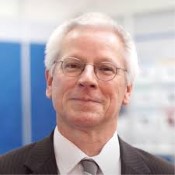
Carsten Damerau, HNP Mikrosysteme GmbH
Title: Dynamic Micromixer for Low Flow Rates
Dr. Carsten Damerau studied Chemistry at Leibniz University Hannover, became
scientific assistant at the Institute of Organic Chemistry and finished his
doctorate degree in the end of 1991.
In 1993 he became head of laboratory at the company Chema-Technik
Recycling GmbH situated in Banzkow, Germany. He was responsible for R&D in
the area of recycling processes for paints, coating materials and concrete
additives. In 2000 he started a new position at Fritz Burchardi GmbH & Co KG
in Panten, Germany. Here he was responsible for quality assurance, acquisition
and sales and customer support at construction sites. Starting in the end of
2003 Dr. Damerau worked as freelance consultant until he started a position as
scientific assistant at Hochschule Wismar, Institute of Surface- and Thin Film
Technology working on optimizing plasma processes.
In January 2006 Dr. Damerau accepted a position at HNPM in customer support
and acquisition in the area of chemistry and process engineering.
Laurentiu Vladuceanu, DFC Co., Ltd
Title: Device for Flow Chemistry (DFC)
Bio Coming soon
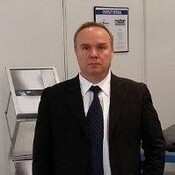
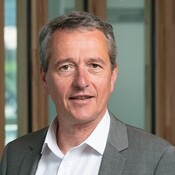
Eric Aubay, KHIMOD
Title: Scaling-up continuous hydrogenation
Eric Aubay holds a degree in chemical engineering and a PhD in quantum physics from Paris University. Over the past 30 years, he has built a career in the chemical and industrial sectors by combining strong scientific expertise with executive leadership. He is the inventor of 33 patents, reflecting his commitment to innovation and technology transfer. He has worked for several large chemical companies, including Rhodia, Perstorp, PTT Global Chemical, and Solvay, in various positions in R&D, strategy, business management, and M&A. For the past two years, he has been the VP Flow Chemistry at KHIMOD, leading the development of heat exchanger reactor technology for flow chemistry applications. He also led the THOR industrial e-methanol pilot, which demonstrated outstanding CO₂ conversion and process intensification performance compared to similar technologies. He also led the THOR industrial e-methanol pilot, which demonstrated outstanding CO₂ conversion and process intensification performance compared to similar technologies.
Markus Schneider, Little Things Factory by PLANOPTIK
Title: Next Generation Glass Microfluidics
Markus Schneider is a Key Account Manager for Microfluidics at Little Things Factory, the microfluidics brand of PLANOPTIK. He joined the company in 2012 and brings more than a decade of experience in the development and production of customer-specific microrstructured mixers, flow reactors, and microfluidic components made from glass, quartz, and glass–silicon composites, with typical applications in chemical and pharmaceutical synthesis, life sciences, and diagnostics.
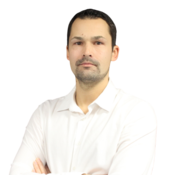
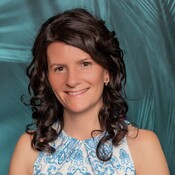
Erika Bálint, ThalesNano, Inc.
Title: Modular Continuous Flow Reactor Platform for Multilevel Chemical Education
Erika Bálint is a chemical engineer and received her PhD in synthetic organic chemistry from the Budapest University of Technology and Economics (BME) in 2013, where she became a research associate in 2013 and an assistant professor in 2017. She is currently an associate professor and the head of the Innovative Pharmaceutical and Chirotechnological Research Group at BME. She is the president of the Association of Hungarian Women in Science. She has been 18 years of experience in organic chemistry and has been teaching and mentoring students over 15 years. She is highly motivated to teach flow chemistry to undergraduate students in order to train flow chemists.
Anna Gerdova, Magritek GmbH
Title: Benchtop NMR spectroscopy for optimization and monitoring of flow reactors
Bio Coming soon
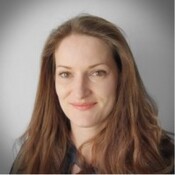
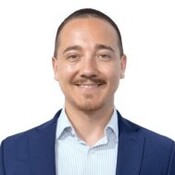
Lorenzo Gazzola, Zaiput Flow Technologies
Title: A new stacked, continuous, scalable, high performance crystallizer
Lorenzo graduated in Economics in 2018 and worked for 3 years in the USA as a salesperson, supplying cleanrooms to the North American pharmaceutical market. He joined Zaiput at the beginning of 2021 to support the growth of the company in Europe and he is now Zaiput’s direct sales contact for all customers outside of North America. In his role, his focus is on helping customers improve their chemical processes through enhanced extractions and separations in flow.